Guides
District Cooling Tax and Accounting in the UAE (2026)
District cooling VAT and tax in the UAE: 5% on capacity and consumption charges, the Dubai RSB and Abu Dhabi DoE licences, IFRS 15 and 16 and Corporate Tax.
district cooling vat uae
As of October 2026, district cooling charges in the UAE are subject to VAT at 5%: no exemption or zero rate in Federal Decree-Law No. 8 of 2017 covers cooling, so capacity, consumption, connection and meter charges are all standard-rated when supplied in the State. In Dubai, only providers and billing agents licensed by the Regulatory and Supervisory Bureau may supply the service under Executive Council Resolution No. 6 of 2021; in Abu Dhabi the Department of Energy licenses schemes.
- District cooling charges
- 5% VAT
- Dubai regulator
- RSB licence required
- Corporate Tax
- 0% to AED 375,000, 9% above
No exemption or zero rate applies under Federal Decree-Law No. 8 of 2017
Executive Council Resolution No. 6 of 2021
Article 3, Federal Decree-Law No. 47 of 2022
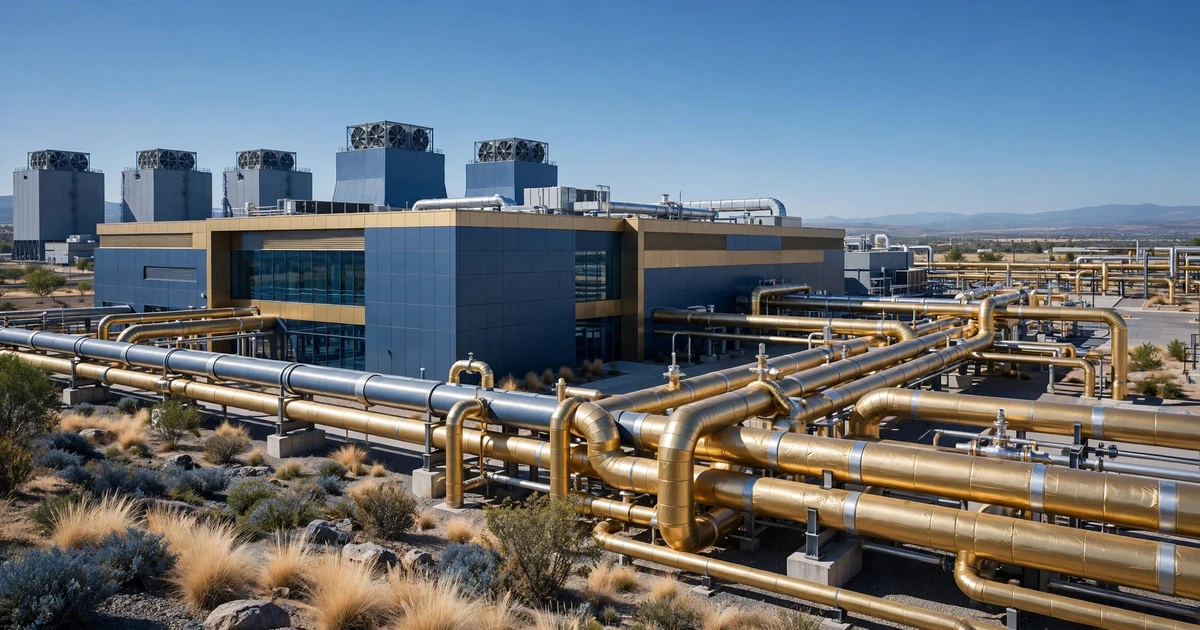
# VAT on capacity, consumption and connection charges
Profits are taxed at 9% above AED 375,000.
The VAT Decree-Law exempts only a short list of supplies, such as residential buildings, bare land and local passenger transport, and none of its zero-rating categories covers cooling. District cooling charges supplied in the UAE are therefore standard-rated at 5%. That applies to each element a bill typically contains:
- Capacity or demand charges for the contracted refrigeration tonnage;
- Consumption charges for metered usage;
- Connection or capacity reservation fees paid once when a building joins the network; and
- meter, administration and late-payment related charges, where they are consideration for a supply.
Article 2 of the VAT Executive Regulation treats supplies of water and of all forms of energy, including gas used for cooling or air conditioning, as supplies of goods. Article 28 of the Decree-Law has special place-of-supply rules for water and energy delivered through a distribution system. Whether chilled water is classed as goods or services, the domestic rate is the same 5%, but the classification can affect cross-border or GCC cases, so document the position.
Landlord recharges need care. If the tenant holds its own account with the provider, the landlord makes no supply of cooling. If the landlord buys cooling and recharges it under the lease, decide whether the recharge is a separate supply (5%) or part of a single supply with the rent, which can matter where the rent is exempt residential rent. FTA Public Clarification VATP040 explains the rules on supplies of more than one component; check the lease wording before choosing the treatment.
# Tax points, billing agents and invoices
Cooling contracts run for years and are invoiced monthly or quarterly. Under Article 26 of the VAT Decree-Law, for contracts with periodic payments or consecutive invoices the date of supply is the earliest of the tax invoice date, the payment due date shown on the invoice, the date payment is received, or one year after the supply was provided. VAT is due on each billing cycle, not when the contract is signed.
Billing agents. Many end users in Dubai are billed by a third-party billing agent rather than by the plant owner. Executive Council Resolution No. 6 of 2021 requires both district cooling providers and billing service providers to be licensed by the Regulatory and Supervisory Bureau for Electricity and Water (RSB), and bills are issued on the cooling-capacity tariff system or another system the RSB approves. For VAT, the contracts decide whether the agent buys and resells cooling (two supplies, both at 5%) or acts in the name of the provider (the provider's supply, with a separate 5% fee for the agent's service). Make sure invoices show the right supplier name and TRN.
Deposits. A refundable security deposit is not consideration and carries no VAT until it is applied against unpaid bills.
# Licensing in Dubai and Abu Dhabi
Dubai. Executive Council Resolution No. 6 of 2021 regulates district cooling services in the emirate. It provides that only service providers licensed by the RSB and other concerned departments may provide district cooling and billing services, requires approvals before cooling units are installed, sets terms for measuring consumption and issuing bills, and specifies penalties for violations. Grievances against penalties go to the Chairman of the Dubai Supreme Council of Energy in writing within 30 days of notification.
Abu Dhabi. The Department of Energy issued the District Cooling Regulations and the District Cooling Applicability Regulations, approved by the Abu Dhabi Government in September 2019, covering existing and new schemes. Existing schemes are reviewed individually during licensing, which can allow transitional arrangements for legacy commercial terms. The DoE also publishes technical and metering codes.
For the books, this matters in three ways: licence and regulatory fees are deductible business costs; fines for regulatory breaches are not deductible for Corporate Tax and must be added back; and tariff decisions by the regulator can change the price of existing contracts, which affects revenue estimates and impairment testing.
# Accounting: connection fees, embedded leases and plant
- Connection fees (IFRS 15). A one-off connection charge is revenue only when it transfers a distinct good or service. If it simply gives the customer ongoing access to the network, it is recognised over the expected period of supply, not on receipt, even though VAT is due at the tax point.
- Embedded leases (IFRS 16). A long-term contract where a plant is dedicated to one customer who directs its use may contain a lease. Assess each dedicated-plant agreement at inception.
- Concessions. Plants built under agreements with government or master developers may fall under IFRIC 12 service concession accounting.
- Plant and depreciation. Chillers, cooling towers, pipelines and thermal storage are long-lived assets with different useful lives; componentise them. UAE Corporate Tax follows accounting depreciation and has no separate capital allowances.
- Unbilled revenue. Accrue consumption between the last meter read and the period end.
Corporate Tax adjustments for leases are covered in our guide to lease accounting and tax adjustments.
# Corporate Tax, financing and e-invoicing
District cooling companies pay Corporate Tax under Federal Decree-Law No. 47 of 2022 at 0% up to AED 375,000 of taxable income and 9% above. The sector is capital-intensive and usually debt-financed, so the general interest limitation rule matters: net interest expenditure above the AED 12 million de minimis is deductible only up to 30% of tax-adjusted EBITDA, with disallowed amounts carried forward. See our interest limitation guide.
Providers that belong to multinational groups with consolidated revenue of EUR 750 million or more should also check the UAE Domestic Minimum Top-up Tax, which applies from 2025 and is explained in our Pillar Two guide.
E-invoicing. Under Ministerial Decisions No. 243 and No. 244 of 2025, businesses with revenue of AED 50 million or more must appoint an Accredited Service Provider by 30 October 2026 and issue e-invoices from 1 January 2027; others follow from 1 July 2027. Bills to developers, owners associations and commercial tenants are B2B and in scope; bills to individual residents are B2C and outside the current scope. High-volume monthly billing makes early system testing essential.
# Key points: district cooling tax at a glance
The rules above reduce to a short checklist for anyone supplying or buying district cooling in the UAE.
- VAT: every element of the bill — capacity, consumption, connection and meter charges — is standard-rated at 5%, because no exemption or zero rate in the VAT Decree-Law covers cooling.
- Licensing: in Dubai, providers and billing agents need an RSB licence under Executive Council Resolution No. 6 of 2021; in Abu Dhabi, the Department of Energy licenses schemes under its 2019 regulations.
- Invoices: VAT falls due on each billing cycle under the Article 26 date-of-supply rules, and a refundable security deposit carries no VAT until it is applied against unpaid bills.
- Accounting: a connection fee is recognised under IFRS 15 over the expected supply period unless it transfers a distinct good or service, and dedicated-plant contracts may contain an IFRS 16 lease.
- Corporate Tax: profits are taxed at 0% up to AED 375,000 and 9% above, regulatory fines are not deductible, and the interest limitation rule caps net interest above the AED 12 million de minimis at 30% of tax-adjusted EBITDA.
Sources and legal basis
Legislation and decisions2
- Federal Decree-Law No. 8 of 2017
- Federal Decree-Law No. 47 of 2022
Terms used5
- Regulatory and Supervisory Bureau
- Abu Dhabi Department of Energy
- Executive Council Resolution No. 6 of 2021
- IFRS 15
- IFRS 16
- Federal Decree-Law No. 8 of 2017 on Value Added Tax
- Cabinet Decision No. 52 of 2017 (VAT Executive Regulation) as amended by Cabinet Decision No. 100 of 2024
- Dubai Executive Council Resolution No. 6 of 2021 and Abu Dhabi Department of Energy District Cooling Regulations (2019)
- FTA Public Clarification VATP040Federal Tax Authority
- Federal Decree-Law No. 47 of 2022 on the Taxation of Corporations and Businesses
- Ministerial Decisions No. 243 and No. 244 of 2025 (Electronic Invoicing System)
Rates, thresholds and deadlines change. Every figure above is linked to the authority that publishes it — if the two ever disagree, the authority is right and this page is out of date. Tell us and we will fix it.
Frequently asked questions
Is VAT charged on district cooling in the UAE?
Yes. District cooling is not exempt or zero-rated, so capacity, consumption and connection charges supplied in the UAE carry VAT at 5%.
Is a chiller fee recharged by a landlord subject to VAT?
It depends on the lease. A separately agreed cooling recharge is generally a 5% supply, but where cooling forms part of a single supply with exempt residential rent, the single or multiple supply rules in FTA Public Clarification VATP040 decide the treatment.
Who regulates district cooling in Dubai?
The Regulatory and Supervisory Bureau for Electricity and Water (RSB) licenses district cooling providers and billing agents under Executive Council Resolution No. 6 of 2021.
How should a connection fee be accounted for?
Under IFRS 15 it is recognised over the expected supply period unless it transfers a distinct good or service, while VAT is still due at the tax point.
When is VAT due on district cooling bills?
Under Article 26 of the VAT Decree-Law, for contracts with periodic payments or consecutive invoices the date of supply is the earliest of the tax invoice date, the payment due date shown on the invoice, the date payment is received, or one year after the supply was provided. VAT is therefore due on each billing cycle, not when the contract is signed.
Who licenses district cooling providers in Abu Dhabi?
In Abu Dhabi, the Department of Energy licenses district cooling schemes. In Dubai, only providers and billing agents licensed by the Regulatory and Supervisory Bureau (RSB) may supply the service, under Executive Council Resolution No. 6 of 2021.
How is district cooling income taxed under Corporate Tax?
District cooling companies pay Corporate Tax under Federal Decree-Law No. 47 of 2022 at 0% up to AED 375,000 of taxable income and 9% above it. Because the sector is capital-intensive and usually debt-financed, the general interest limitation rule matters: net interest expenditure above the AED 12 million de minimis is deductible only up to 30% of tax-adjusted EBITDA, with disallowed amounts carried forward.